
Criminal Cases in the Pointe Coupee Parish Courts
The 18th Judicial District Court has original criminal jurisdiction in Pointe Coupee Parish and exclusive original jurisdiction over felony cases. It also hears ordinary state-law misdemeanors. The district has four divisions and serves Pointe Coupee, Iberville, and West Baton Rouge parishes, but a criminal file remains with the clerk in the parish where it was filed. A judge’s office in another parish does not move the Pointe Coupee docket.
The Pointe Coupee Clerk of Court is custodian of the docket, pleadings, minute entries, disposition, sentence, and certified court copies. New Roads City Court or a mayor’s court may instead hold a city ordinance, traffic, or other limited municipal matter. The issuing agency or citation is often the best clue when an 18th JDC search produces no result.
Pointe Coupee ClerkNet Access
The official ClerkNet portal uses email and password registration and places its search and document tools behind a subscription guard. Its public screen does not reveal the criminal date range or every search control. A user should create an account, review current subscription terms, and confirm coverage rather than assume that every docket image is free or online.
The Pointe Coupee Clerk of Court offers the practical fallback. The Criminal Department can run a paid name search, locate an older file, and provide copies. The portal may be a good index, but the clerk’s certified record controls when an outcome must be established.
How to Search Case Records
Use the most specific identifier available. A docket number is safer than a common name, while an approximate filing year and date of birth can help the clerk distinguish similar names. Search results should be read as leads until the docket and disposition are checked.
- Open ClerkNet, register with an email and password, and review its subscription and coverage terms.
- Search with the docket number when known; otherwise try the full name with suffix and spelling variants.
- Match the division, filing year, charge, and status rather than relying on the caption alone.
- Read minute entries in sequence and distinguish the filed charge from the plea, verdict, and sentence.
- Order a certified minute entry or other certified disposition from the Criminal Department when proof is needed.
| Field Label | Type | Required | Notes |
|---|---|---|---|
| Yes for account | Registration and login identifier | ||
| Password | Password | Yes | Authenticates the account |
| Register / Login | Buttons | Yes | Required before gated tools |
| Subscription | Access control | Conditional | May be needed for search or documents |
| Criminal criteria | Gated fields | Unknown | Confirm exact fields after access |
Pointe Coupee Court Search Costs
The Clerk’s Criminal Department publishes three prices that answer different needs: $20 for a criminal background or name search, $10 for a certified minute entry, and $1 per copied page. A search fee pays for locating the record; it does not turn every page into a certified document. Ask which item will establish the fact you need before paying.
The official Louisiana fee statute below concerns expungement, not an ordinary docket search. The maximum-cost and allocation provision shows why a record-clearing filing has a different cost structure.
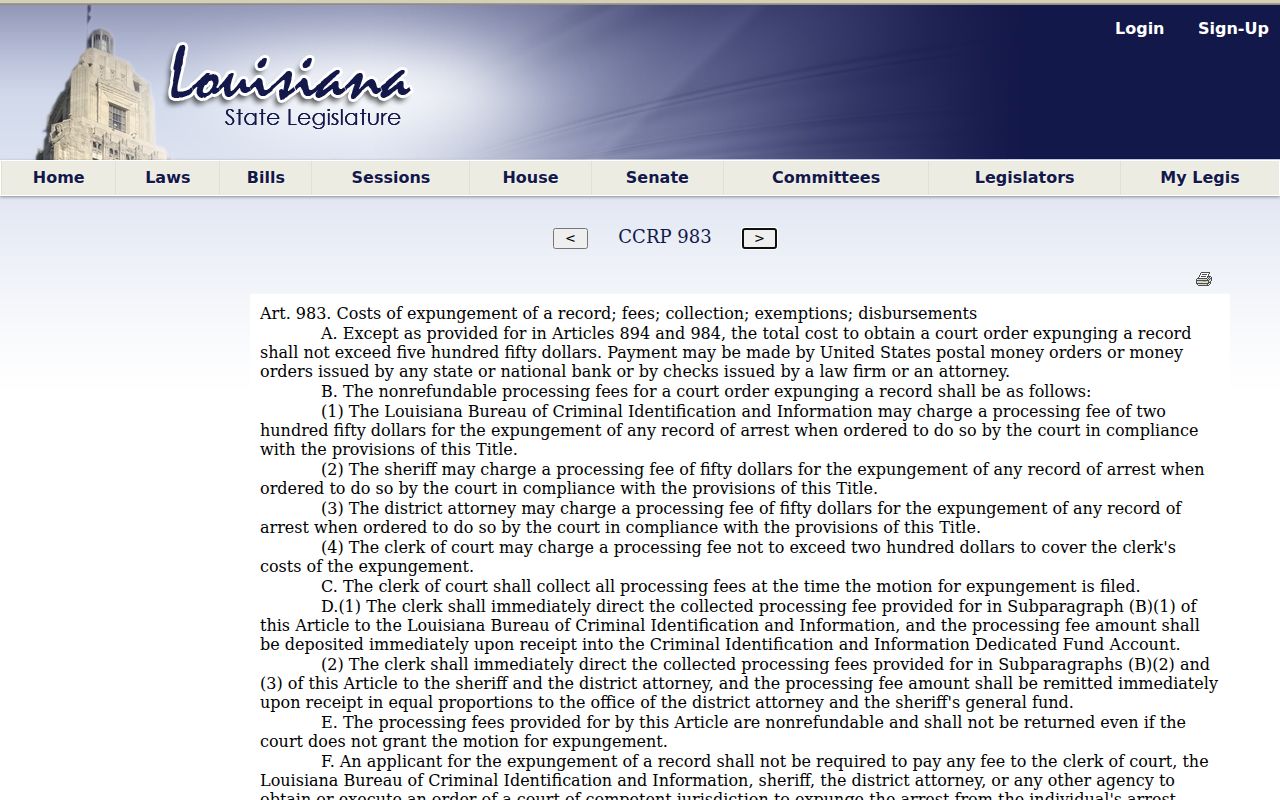
The statute caps total expungement processing cost at $550, subject to statutory exemptions, while routine clerk searches and copies use the department’s separate schedule.
What the Case File Shows
A Pointe Coupee Parish criminal case file traces what happened after an arrest reached court. It can contain the charging instrument, amendments, counsel appearances, bond orders, motions, hearing minutes, trial or plea result, judgment, sentence, costs, restitution, probation terms, and appeal activity. The docket is therefore richer than a booking entry or repository summary.
| Case Number & Court | Identifies the Pointe Coupee docket, division, caption, and filing court. |
|---|---|
| Charging Document | Shows the bill of information or indictment and later amendments. |
| Docket Entries | Chronological filings, appearances, orders, motions, and minute activity. |
| Hearing Dates | Scheduled event type and date, subject to later continuance. |
| Disposition & Judgment | Records dismissal, plea, verdict, acquittal, and final adjudication. |
| Sentence & Conditions | States confinement, probation, fines, costs, restitution, and conditions. |
Pointe Coupee Charges Can Change
The arresting officer and jail record the initial allegation, but District Attorney Antonio M. Clayton’s 18th JDA decides whether and how a state prosecution proceeds. The prosecutor may file a bill of information, present an eligible felony matter to a grand jury, amend a charge, offer diversion where available, or decline prosecution. A grand jury may return an indictment or no bill. Those decisions explain why the roster’s charge may not match the court caption or final conviction.
The 18th JDA office page identifies the Pointe Coupee contact channel.
Callers should have the docket number, division, and next date ready. The DA is not the custodian for certified clerk minutes and does not provide general legal advice to outside record searchers.
Stages of a Criminal Case
After booking, a judicial officer addresses first appearance, probable cause, and release conditions. The district attorney then screens the matter. A filed bill or indictment leads to arraignment, discovery, motions, and either a plea or trial. Disposition and sentencing appear later in the minutes, with appeal or post-conviction activity following when applicable. Dates vary by case, so no fixed local timeline should be inferred from a roster entry.
Case flow: Arrest › Booking › Charges › Arraignment › Disposition › Sentencing
Missing Pointe Coupee Case Files
A missing ClerkNet result does not prove that no case exists. Older records may be paper files, image archives, or off-site holdings, and the subscribed index may have a limited date range. Email criminal@pcclerk.org or call (225) 638-9596 with the person’s name, approximate arrest or filing year, date of birth when appropriate, possible charge, and any known docket number. Ask whether advance retrieval is needed.
Also check the municipal channel when the matter began with a city citation. If the issue is a mismatch on your own statewide BCII record, first obtain the certified clerk disposition and then use BCII’s correction process. The court record supplies the authoritative outcome that a repository entry may be missing.
For a counter request, specify whether you want an index result, a docket sheet, ordinary copies, or certification. Those products are not interchangeable. Bring the known case details and call before a long trip because closures, retrieval time, and current entry procedures may affect service. No detailed courthouse parking or security policy was located in the official sources, so verify those points directly instead of relying on assumptions.
Federal Cases From Pointe Coupee
Federal criminal matters from Pointe Coupee Parish belong to the U.S. District Court for the Middle District of Louisiana, not the 18th JDC. PACER provides federal dockets and documents after registration. It charges $0.10 per page and automatically waives quarterly charges of $30 or less under the current schedule described in the research. The federal courthouse is at 777 Florida Street in Baton Rouge, and its clerk can be reached at (225) 389-3500.
The official PACER service explains registration and billing.
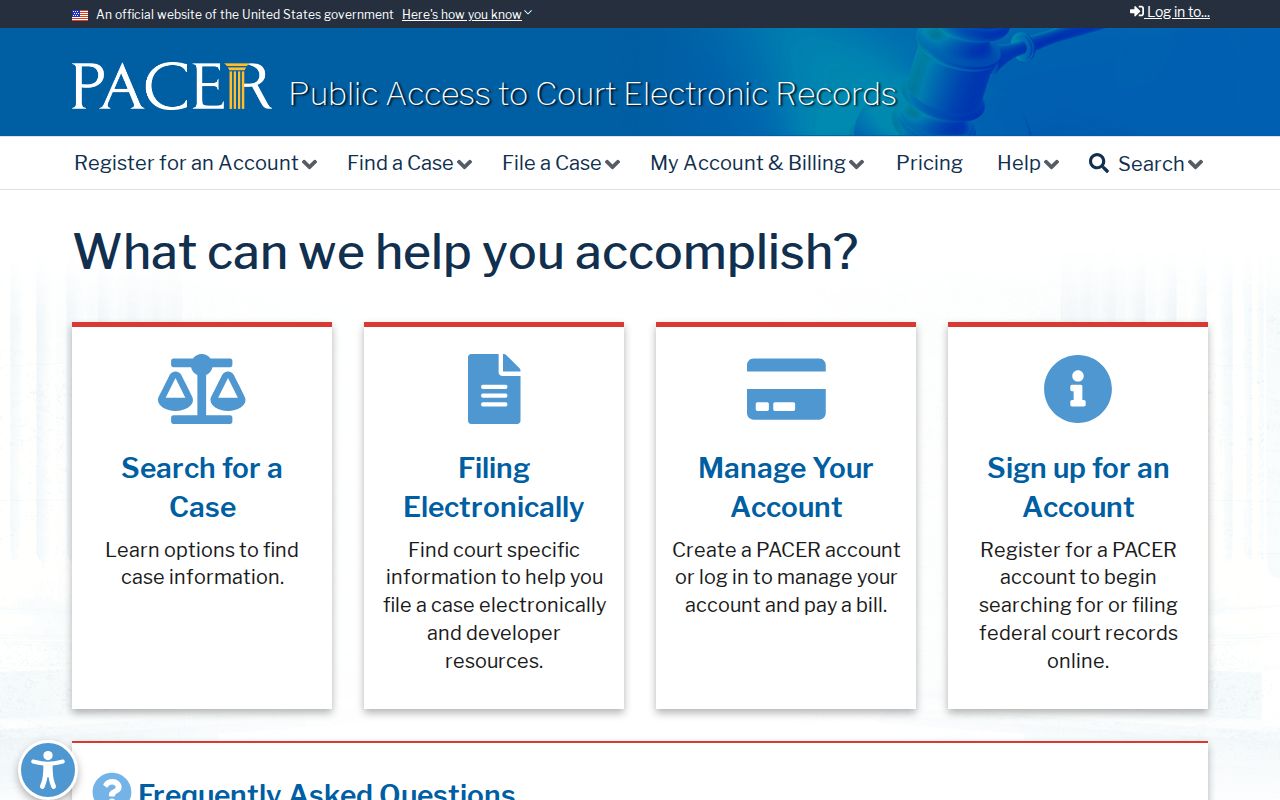
PACER is distinct from the FBI’s identity-history process and the federal prison locator. A federal docket establishes court events; it does not serve as a complete national criminal-history report.
Access & Restrictions
Louisiana Public Records Law generally supports inspection and copying of public records during regular hours, subject to exemptions and reasonable custodian procedures. Court access does not make every filed detail public. Juvenile matters, expunged files, victim and minor identifiers, financial data, Social Security numbers, and some active-investigation information may be sealed, withheld, or redacted.
For filings made under the privacy practice effective January 1, 2026, private information excluded under Code of Criminal Procedure article 14.1(B) should not appear in the public filing. If a result is absent, ask the clerk whether it is restricted rather than assuming deletion.
Louisiana expungement removes eligible arrest and conviction information from public access without destroying it. The official policy statute explains that effect.
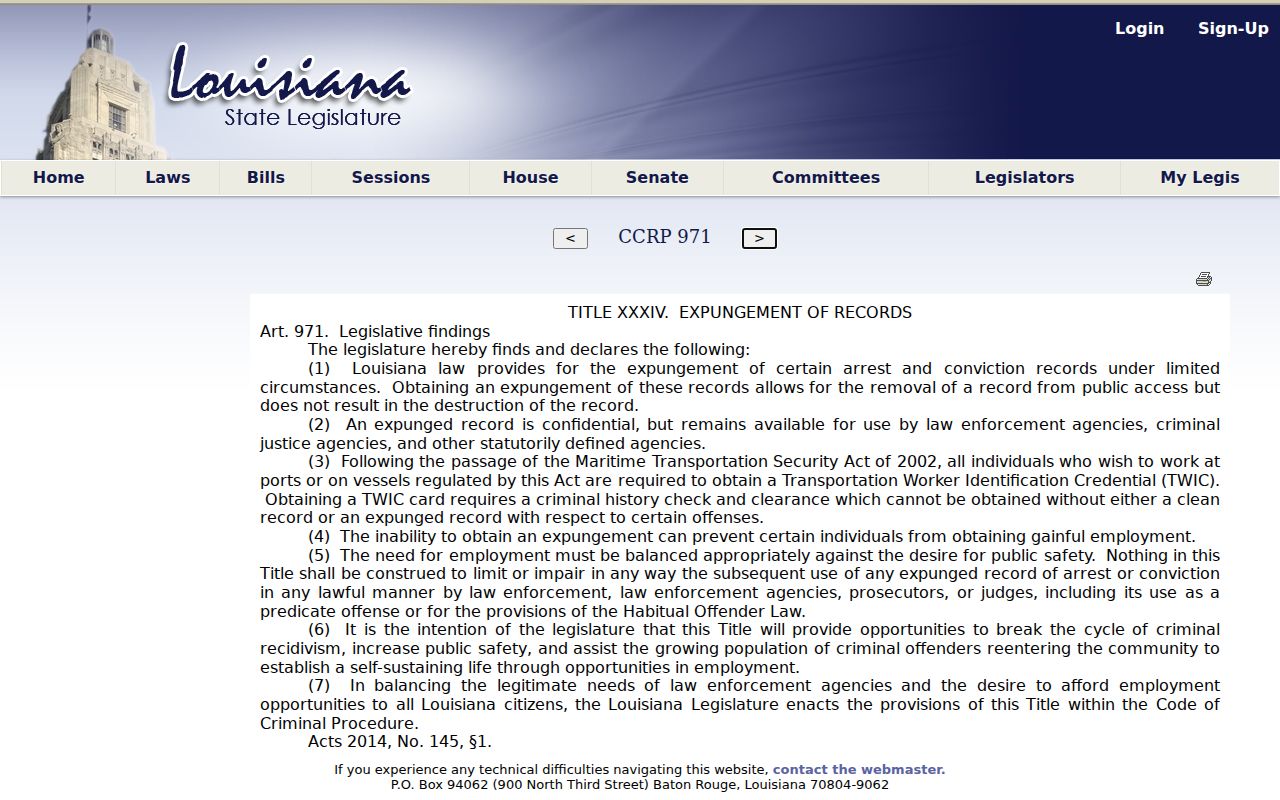
Law enforcement, prosecutors, judges, and other authorized agencies may retain statutory access. A public search that no longer returns the case therefore does not mean the underlying record was destroyed.